

Meet Gibki
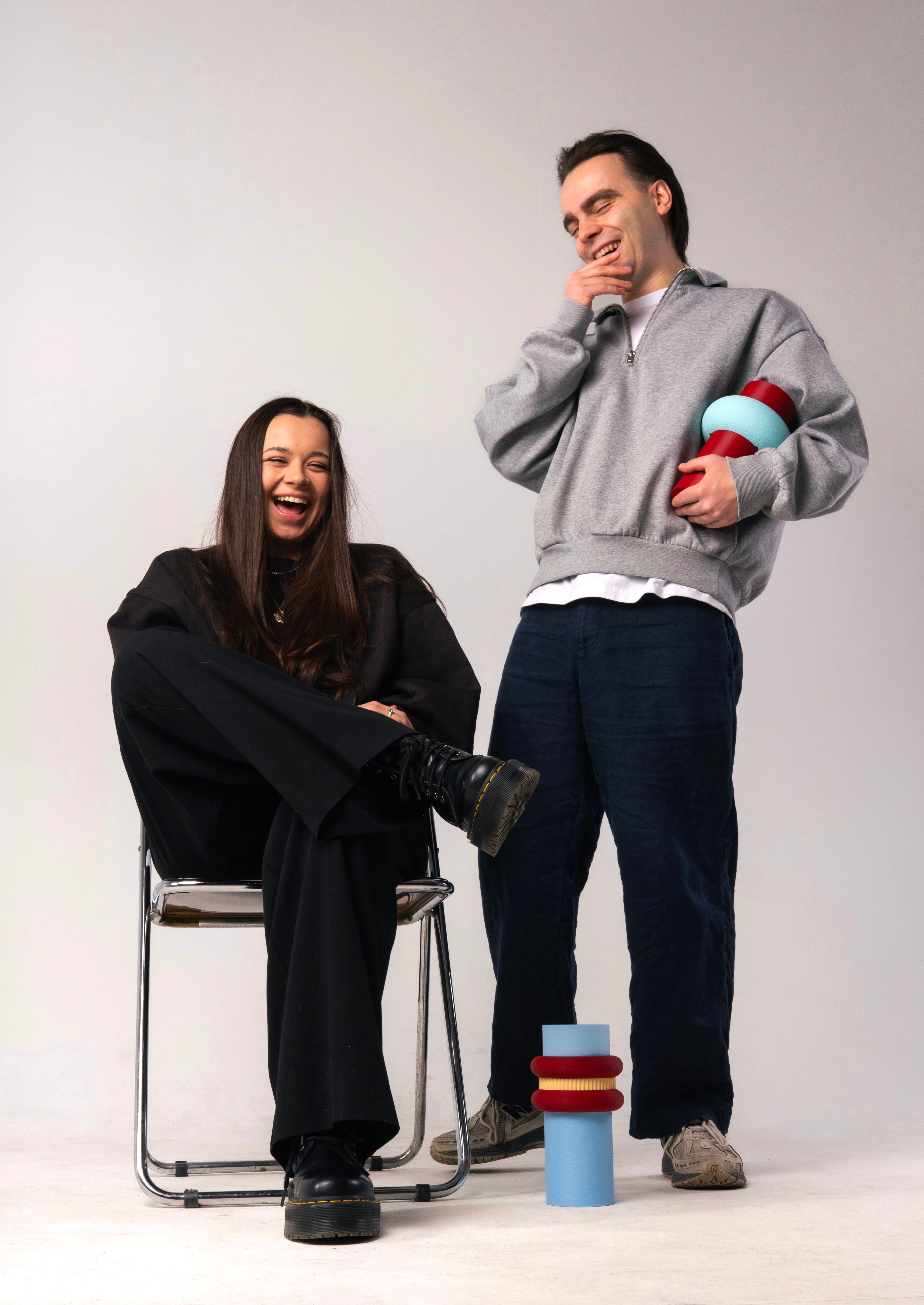
Some objects feel instantly joyful.
GIBKI is a Polish design studio founded by Sonia and Filip, combining playful forms, bold colors, and 3D printing technology. What started as an experiment in 2023 quickly turned into a small studio producing made-to-order objects designed to bring color into everyday spaces.
Behind the objects is a long friendship, a home studio, and many hours spent refining shapes and colors after their regular workday.
We asked them a few questions about how GIBKI started, their creative process, and the objects they’re most proud of.

How did you meet and how did the idea for GIBKI come about in 2023?
We've known each other since middle school, so GIBKI is built on a very long friendship.
In 2023, Filip bought a 3D printer and Sonia suggested: why not model something, take it to a design fair, and see how people respond?
So we did. People loved it, and that was enough to convince us to go all in. What started as a curiosity quickly turned into a studio.

What made you want to dive into 3D printing rather than another technique?
It wasn’t really a deliberate choice between techniques. It grew naturally from having the printer and discovering what it could do.
What kept us there is how well the technology aligns with what we care about: made-to-order production, no overproduction, and the ability to iterate quickly.
In the end, the technique and our values turned out to be a natural fit.

What does a typical working day at GIBKI look like? How do you divide tasks?
Both of us still work full-time jobs alongside GIBKI, so a lot gets coordinated remotely during the day.
After work, we head to our home studio where things become more hands-on. Sonia handles design, color selection and combinations, social media, photography, and packing orders.
Filip takes care of everything on the technical side — printing, testing, and turning Sonia’s ideas into actual objects. It’s a clear division that plays to both of our strengths.

How does an idea become a GIBKI object? How many prototypes before the final product?
It usually starts with Sonia — a concept, a form, or simply a feeling of what the object should be and how it could evolve.
Filip then models and prints it, and the testing begins. We want every piece to be beautiful, which means both print quality and form need to be just right, and that often requires many rounds of refinement.
Honestly, we’ve never counted how many prototypes a single piece goes through. Maybe we should start.

Why was working with sustainable materials important to you? Does it complicate the process?
There’s already enough plastic in the world. Working with PLA felt like a responsible choice that didn’t require us to compromise on quality or aesthetics.
It’s a biopolymer derived from renewable resources like corn starch, and when composted with the right enzyme, it can break down in around 50 days.
And no, it doesn’t really complicate the process. If anything, it simplifies our thinking: we know why we use it, and that clarity makes everything easier.

Is there a product you're particularly proud of? Or a prototype that didn’t go as planned?
The POP collection is what we’re most proud of — that’s where everything really clicked.
As for failures, there were definitely some early vases from a period when we were still finding our style. Things that looked great on paper but completely wrong in real life.
We won’t be sharing photos. Some things are better left in the prototype drawer.

Your favorite spots in Poland?
Sonia has a real obsession with cafés and restaurants and could probably list them endlessly across the country.
Staying local in Gdynia: Flow Café for a great breakfast, coffee, pastries, and now even bread. In Gdańsk, their newly opened spot SLOW is also worth a visit.
For restaurants: Bibenda in Warsaw for small plates and sharing, Alga Streetfood in Gdynia for Korean fried chicken, Neon in Gdynia for Asian-style steak tartare on toast, Młoda Polska Bistro in Wrocław for their schnitzel, and Latto Gelato in Gdynia for the best gelato around.

Instagram gibki.design
You can discover GIBKI’s colorful objects in the Re-leaf selection.